
How to Prep Tires for Coating: The Complete Guide for Long-Lasting Results
Applying a tire coating without proper preparation is the fastest way to ruin its performance.
Tire coatings are designed to bond to the rubber, not sit on top like traditional tire dressings. If oils, oxidation, mold release agents, or old dressings remain on the tire, the coating cannot bond correctly — leading to poor durability, uneven appearance, and early failure.
This guide explains how to prep tires for coating, why each step matters, and how to do it the right way for long-lasting protection.
Why Proper Tire Prep Matters for Coatings
Tire coatings rely on surface bonding. Unlike tire dressings, which temporarily enhance appearance, tire coatings create a semi-permanent protective layer that resists dirt, water, and browning.
If tires are not properly prepped:
-
Coatings won’t bond correctly
-
Durability is dramatically reduced
-
Coatings may streak, peel, or fade early
-
Tires may turn brown again quickly
Proper tire prep is not optional — it determines how well and how long a tire coating lasts.
What You’ll Need to Prep Tires for Coating
Before starting, gather the following:
-
A dedicated tire cleaner (not an all-purpose cleaner)
-
A stiff tire brush designed for rubber
-
Clean microfiber towels
-
Water source (hose or pressure washer)
-
Optional: rubber-safe prep wipe or solvent
Using the correct products and tools ensures contamination is removed without damaging the tire.
Step 1: Rinse the Tires Thoroughly
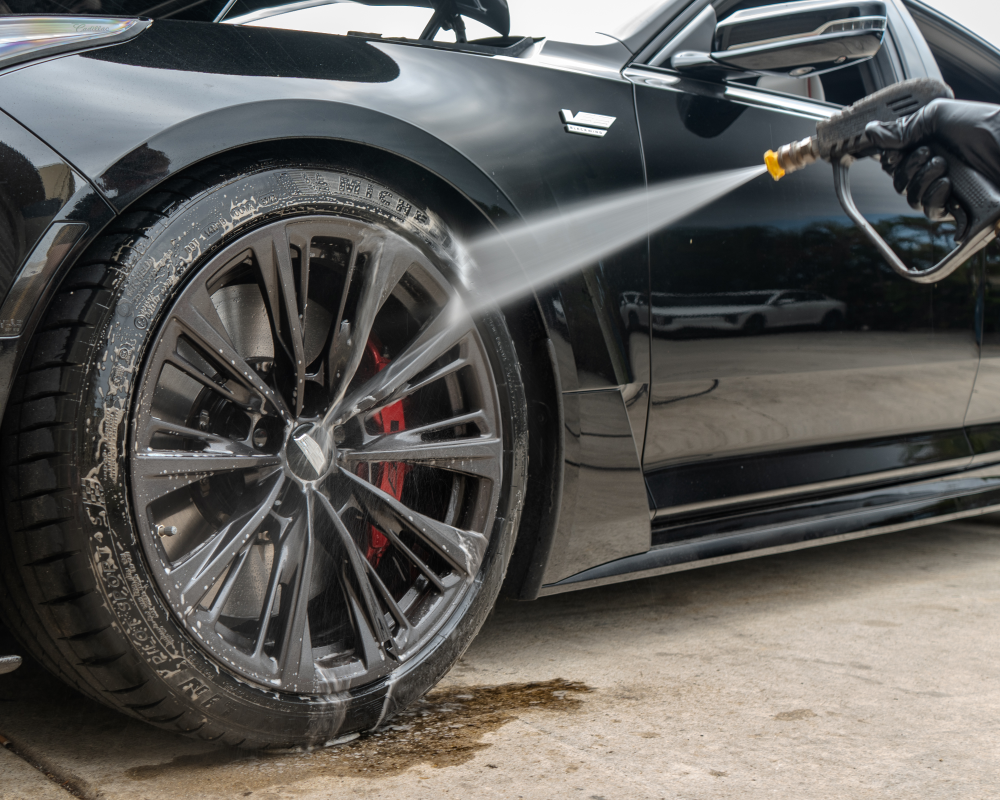
Start by rinsing the tires to remove loose dirt, sand, and debris.
This step prevents loose contamination from being pushed into the rubber during scrubbing and helps the tire cleaner work more effectively.
Step 2: Apply a Dedicated Tire Cleaner
Spray a tire cleaner generously onto the tire sidewall. Tire cleaners are formulated to remove:
-
Rubber oxidation (tire browning)
-
Oils and grease
-
Old tire dressings
-
Embedded road grime
Allow the cleaner to dwell briefly, but do not let it dry on the surface.
Step 3: Scrub Until the Foam Runs Clean
Using a stiff tire brush, scrub the tire sidewall thoroughly.
As you scrub, the foam will often turn brown — this indicates oxidation and contamination being removed. Continue scrubbing, rinsing, and reapplying cleaner until the foam remains white.
If the foam is still brown, the tire is not clean yet.
This step is critical for proper tire coating adhesion.
Step 4: Rinse Completely
Once the tire is fully cleaned, rinse it thoroughly to remove all chemical residue.
Leftover cleaner can interfere with coating bonding, so take your time and ensure the tire is completely rinsed.
Step 5: Dry the Tires Completely
Tire coatings must be applied to a dry surface.
Use clean microfiber towels dedicated to tire use only. Ensure no water remains on the tire, especially in textured sidewall lettering.
Moisture prevents proper bonding.
Step 6: Optional Prep Wipe for Maximum Bonding
For best results — especially before applying a semi-permanent tire coating — use a rubber-safe prep wipe or solvent to remove any remaining oils.
This step further improves coating adhesion and durability. Avoid harsh solvents that are not safe for rubber.
Step 7: Apply the Tire Coating
Once the tire is:
-
Fully clean
-
Free of oils and old dressings
-
Completely dry
You’re ready to apply the tire coating.
Follow the manufacturer’s instructions carefully for:
-
Application method
-
Product amount
-
Cure time
Proper prep ensures the coating bonds evenly and delivers maximum longevity.
Tire Dressing vs Tire Coating Prep: What’s Different?
Tire dressing prep is minimal because dressings sit on the surface.
Tire coating prep is more involved because coatings bond to the rubber itself. That’s why:
-
Deeper cleaning is required
-
Oxidation must be fully removed
-
Surface oils cannot remain
Skipping prep may still allow a dressing to look good temporarily — but it will cause a tire coating to fail early.
Common Tire Coating Prep Mistakes
Avoid these mistakes:
-
Using all-purpose cleaners instead of tire cleaners
-
Not scrubbing long enough
-
Applying coating to damp tires
-
Skipping prep because the tire “looks clean”
-
Applying too much coating at once
Tires can look clean while still being contaminated.
Final Takeaway
When it comes to tire coatings, preparation is everything.
A properly prepped tire allows the coating to bond, last longer, resist browning, and maintain a clean appearance with less maintenance. Rushing or skipping prep will always lead to disappointing results — no matter how good the coating is.
Clean the tire completely, prep it correctly, and the coating will do exactly what it’s designed to do.




Leave a comment
This site is protected by hCaptcha and the hCaptcha Privacy Policy and Terms of Service apply.