
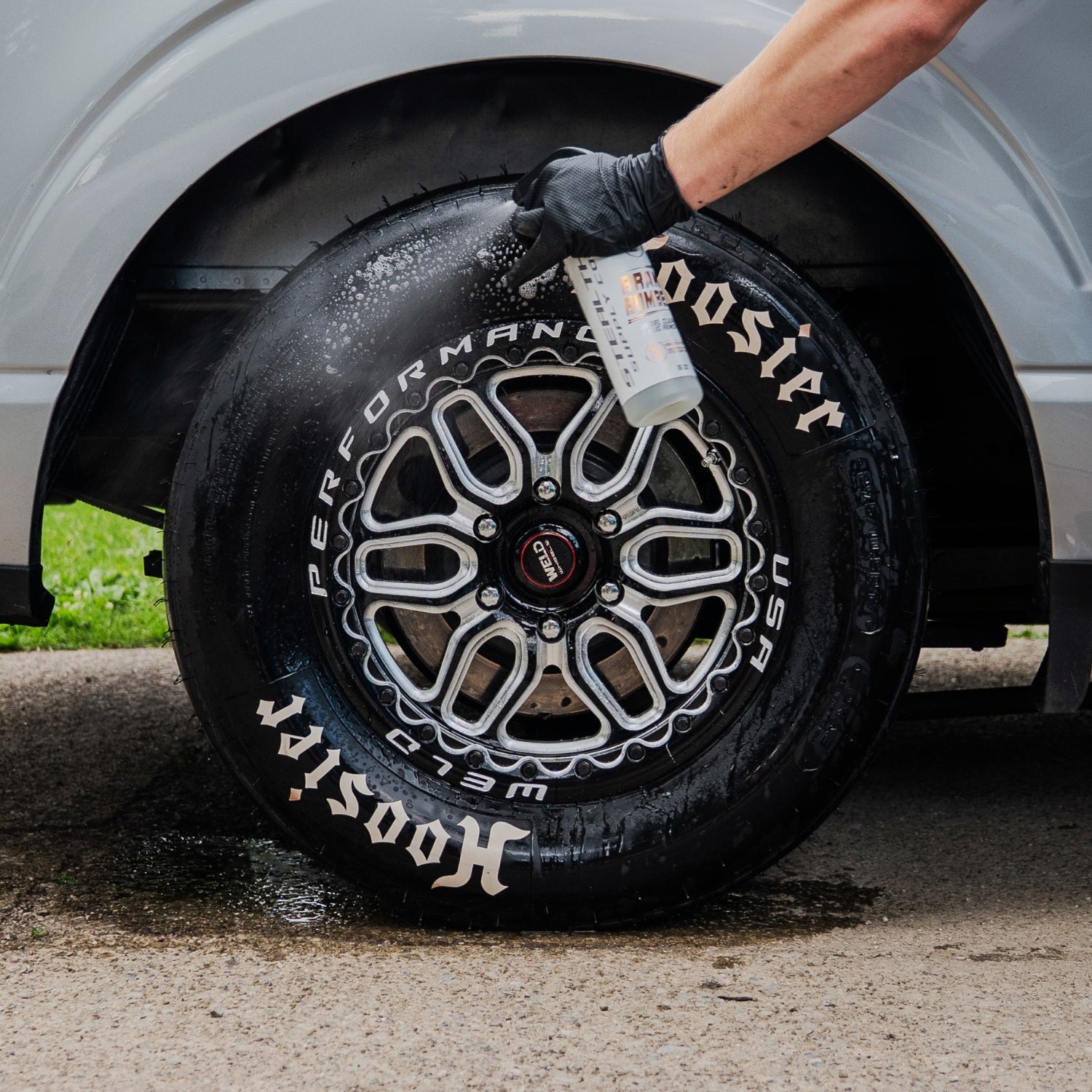
Wheel Cleaner vs Tire Cleaner: Why Using One Product Is a Mistake
Using one product to clean both wheels and tires may seem convenient, but it almost always leads to poor results. Wheels and tires are made from different materials, collect different types of contamination, and require different chemical approaches.
This is why professional detailers never use a single wheel and tire cleaner for both surfaces. They use a dedicated wheel cleaner and a dedicated tire cleaner as part of a complete system.
Here’s why that distinction matters.
Wheels and Tires Require Different Cleaners
Although wheels and tires sit next to each other, they experience completely different forms of contamination.
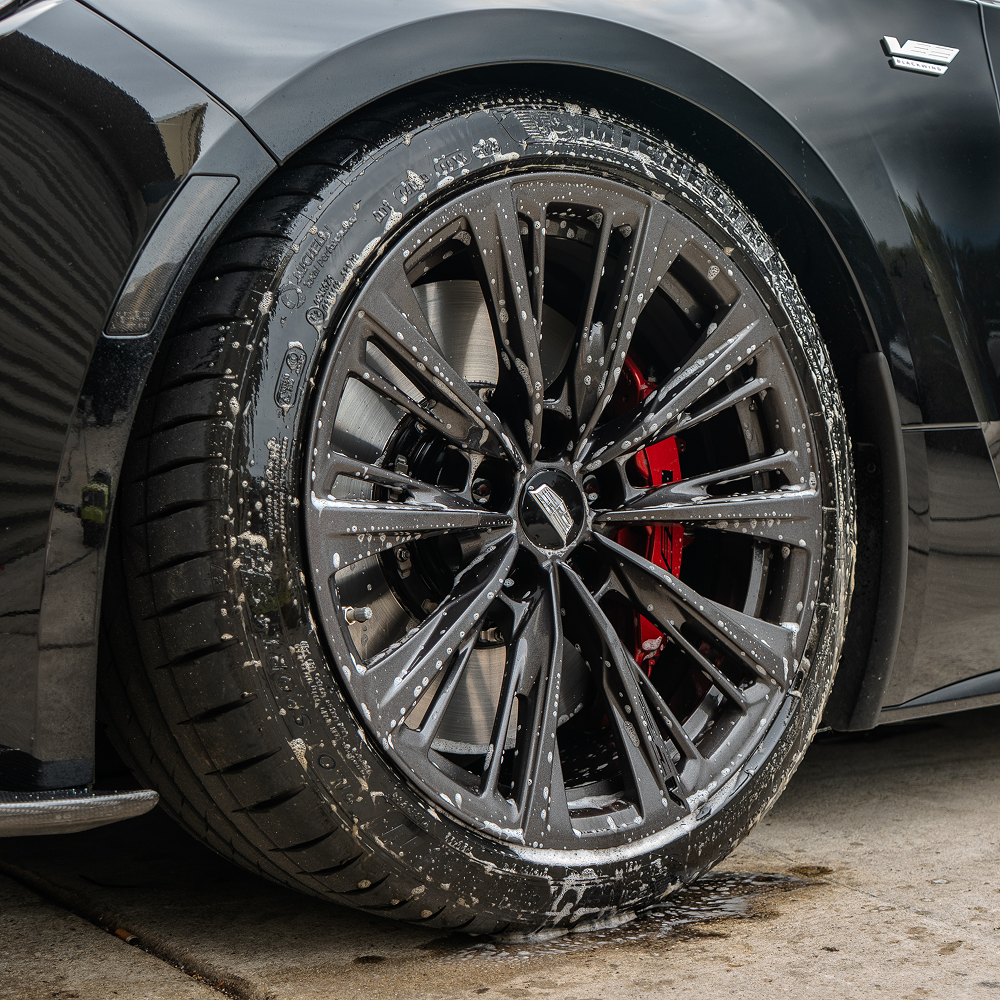
Wheels collect:
-
Brake dust (metallic and iron-based)
-
High-temperature fallout
-
Road salt and traffic film
-
Contamination on clear-coated, painted, polished, anodized, or raw metal surfaces
A wheel cleaner is specifically formulated to remove brake dust and iron contamination safely without damaging wheel finishes.
Tires collect:
-
Rubber oxidation (tire browning)
-
Oils and grease
-
Old silicone tire shine
-
Embedded road grime
A tire cleaner is designed to deep clean rubber by stripping oxidation and buildup so dressings and coatings can properly bond.
Trying to clean both surfaces with one product forces chemical compromises.
Why “Wheel and Tire Cleaner” Products Underperform
Many all-in-one wheel and tire cleaners exist because they’re easy to market. Unfortunately, they are rarely effective.
To safely clean wheels—especially high-end or multi-piece wheels—chemistry must be controlled and balanced. To properly clean tires, chemistry often needs to be stronger and more aggressive.
One formula cannot excel at both without sacrificing:
-
Cleaning power
-
Surface safety
-
Long-term durability
This is why combo products often leave tires brown and wheels still contaminated.
What Happens When You Use Tire Cleaner on Wheels
Tire cleaners are intentionally aggressive because rubber is durable and porous. When tire cleaner is used on wheels, it can:
-
Dull clear-coated wheels
-
Stain polished aluminum
-
Damage anodized finishes
-
Increase long-term corrosion risk
Even if damage isn’t immediate, repeated use can permanently degrade wheel finishes. This is why tire cleaners should never be used as wheel cleaners.
What Happens When You Use Wheel Cleaner on Tires
Wheel cleaners are formulated to dissolve brake dust and iron—not rubber oxidation.
When used on tires, wheel cleaners often:
-
Fail to remove tire browning
-
Leave oils and old dressings behind
-
Create the illusion of a clean tire
This leads to tire shine sling, uneven appearance, and protection that fades quickly. If tires turn brown again after a wash, they were never properly cleaned.
Tire Cleaner vs Wheel Cleaner: Chemistry Matters
From a formulation perspective:
-
Tire cleaners break down oils, oxidation, and embedded rubber contamination
-
Wheel cleaners target metallic particles, brake dust, and road film while protecting finishes
Because these goals are different, professional wheel and tire cleaning always separates the process.
There is no such thing as a “best wheel and tire cleaner” that performs both jobs at a professional level.
Why Professional Detailers Always Use Separate Products
Professional detailers use separate wheel and tire cleaners because it delivers:
-
Better cleaning results
-
Safer wheel finishes
-
Longer-lasting tire protection
-
Less scrubbing and chemical usage
-
Faster maintenance washes over time
A proper wheel and tire cleaning system isn’t about using more products—it’s about using the right cleaner for the right surface.
The Long-Term Cost of Using One Cleaner for Everything
Using a single product for wheels and tires often results in:
-
Excessive agitation
-
Higher chemical consumption
-
Poor bonding of tire dressings and coatings
-
Inconsistent results wash after wash
What feels convenient upfront usually causes frustration later.
The Correct Wheel and Tire Cleaning System
A proper system includes:
-
A dedicated wheel cleaner (performance-focused or ultra-safe depending on wheel type)
-
A dedicated tire cleaner designed for deep rubber cleaning
-
Tools matched to each surface
-
Separate protection steps for wheels and tires
This approach produces consistent, professional-grade results.
Final Takeaway
If one product truly worked as both a wheel cleaner and tire cleaner, professionals would already be using it.
They aren’t.
Because wheels and tires require different chemistry—and treating them the same is the fastest way to compromise results, safety, and durability.




Leave a comment
All comments are moderated before being published.
This site is protected by hCaptcha and the hCaptcha Privacy Policy and Terms of Service apply.